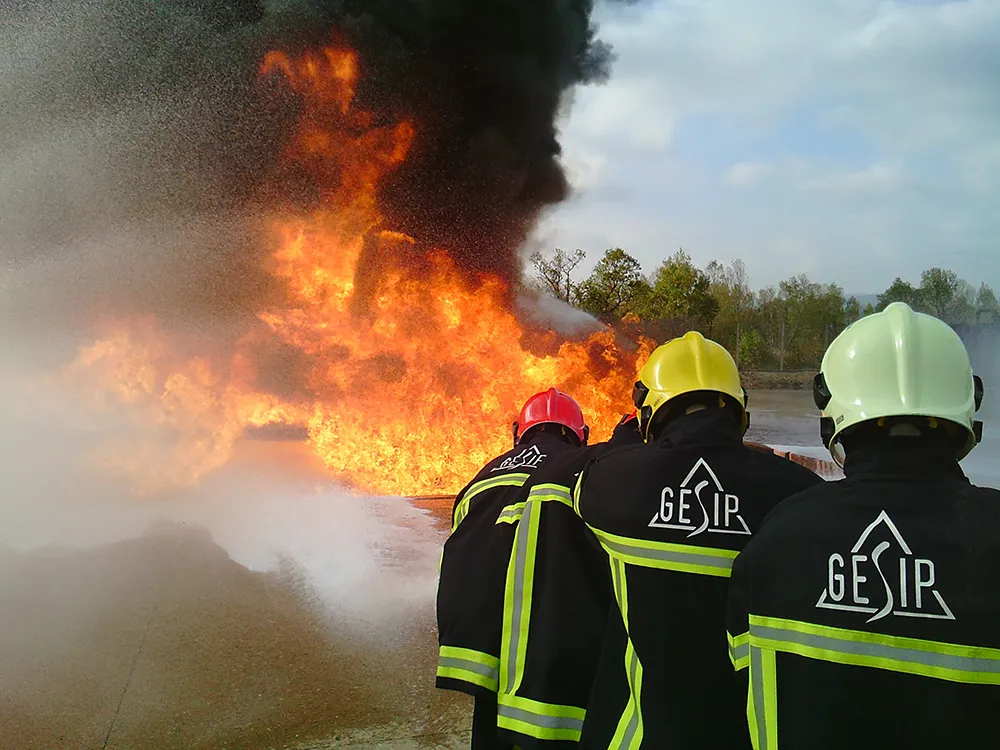
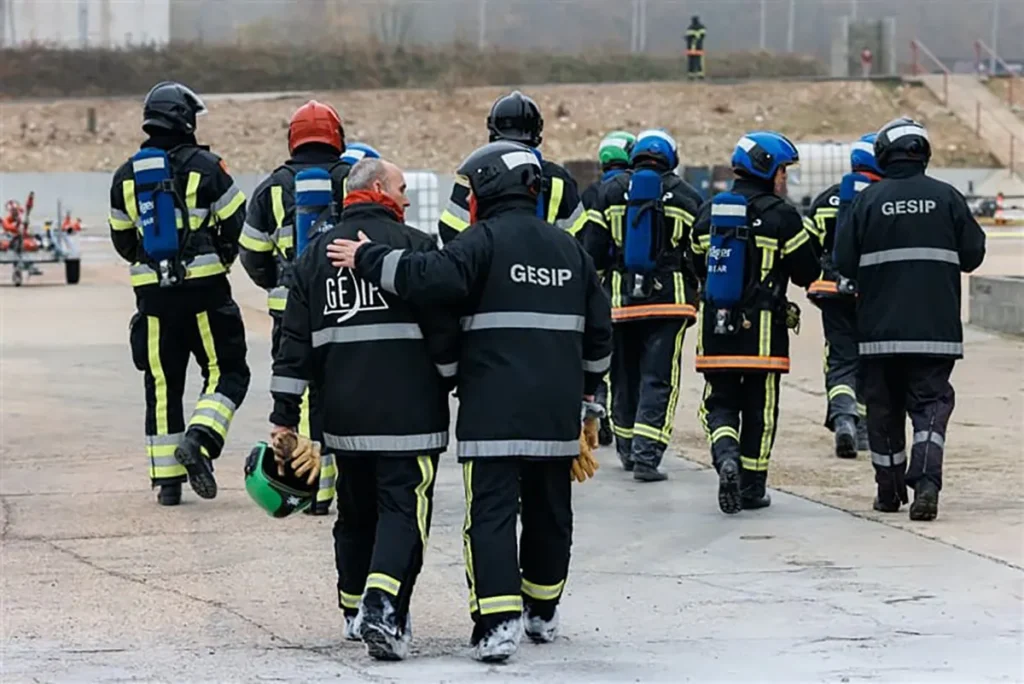
Industrial fires, including battery fires, are driving continuous improvements in the prevention and risk management measures that are implemented. As a leading player in industrial safety, Gesip is committed to advancing knowledge and improving the management of battery fire risks.
Risk Management for Battery Fires in the Industrial Sector
Technological advancements, the development of portable devices, and the rise of electric motors and power systems have led to an increasingly widespread use of lithium batteries (particularly lithium-ion batteries). This has “automatically” increased the frequency of accidents involving these batteries, but has also created a new type of risk related to lithium’s reactivity with water and air.
Although regrettable, these incidents provide valuable lessons that help to continuously improve the safety of personnel and equipment. Industry players, such as Gesip, are committed to managing the risks associated with battery fires by implementing both preventive and reactive protection systems, training programs, and other measures.
Battery fires in industrial fires: definition
Les incendies des batteries lithium ion restent rares mais font aujourd’hui la « Une de l’actualité », notamment lorsque des véhicules sont impliqués. En effet, les conséquences des incendies peuvent s’avérer graves en raison de la toxicité des fumées, des projections générées ou encore du rapide développement et de l’intensité des feux.
See also:Fire safety equipment: How to use it?
To put it simply, a fire in a lithium cell begins with thermal runaway, which produces flammable gases inside the battery. If the vents designed to limit this thermal runaway cannot release the gases, the battery may explode.
Like safety valves for pressure vessels, lithium-ion batteries have, depending on the model, two protection systems:
- lithium cells;
- "Battery System Management," or BMS.
The BMS (Battery Management System) is an electronic circuit that monitors operating parameters (electrical parameters, temperature) and reduces the risk of thermal runaway.
The Risks of Battery Fires
The risk associated with a lithium-ion battery fire arises during the final stage of charging. A fire can occur as a result of a rise in temperature.
The companies most affected by these risks are those that own a fleet of electric vehicles, those that assemble vehicles, those that manage product storage, those that are electrifying equipment or vehicles, and waste management companies (for used batteries).And in the future, it will be companies that store their electrical energy in the form of specific components.
Traditional fire extinguishers are ineffective against this type of fire. However, a portable or wheeled fire extinguisher designed for metal fires can be used. In addition to these specialized powders, the fire can be extinguished by applying large amounts of water over an extended period of time, or even by completely submerging the burning objects in containers filled with water.
See also:Fire Safety
Exemples d’incidents réels de feux de batterie dans des locaux industriels
Waste management companies in France are seeing an increase in fires, caused mainly by the storage of lithium batteries on their industrial premises.
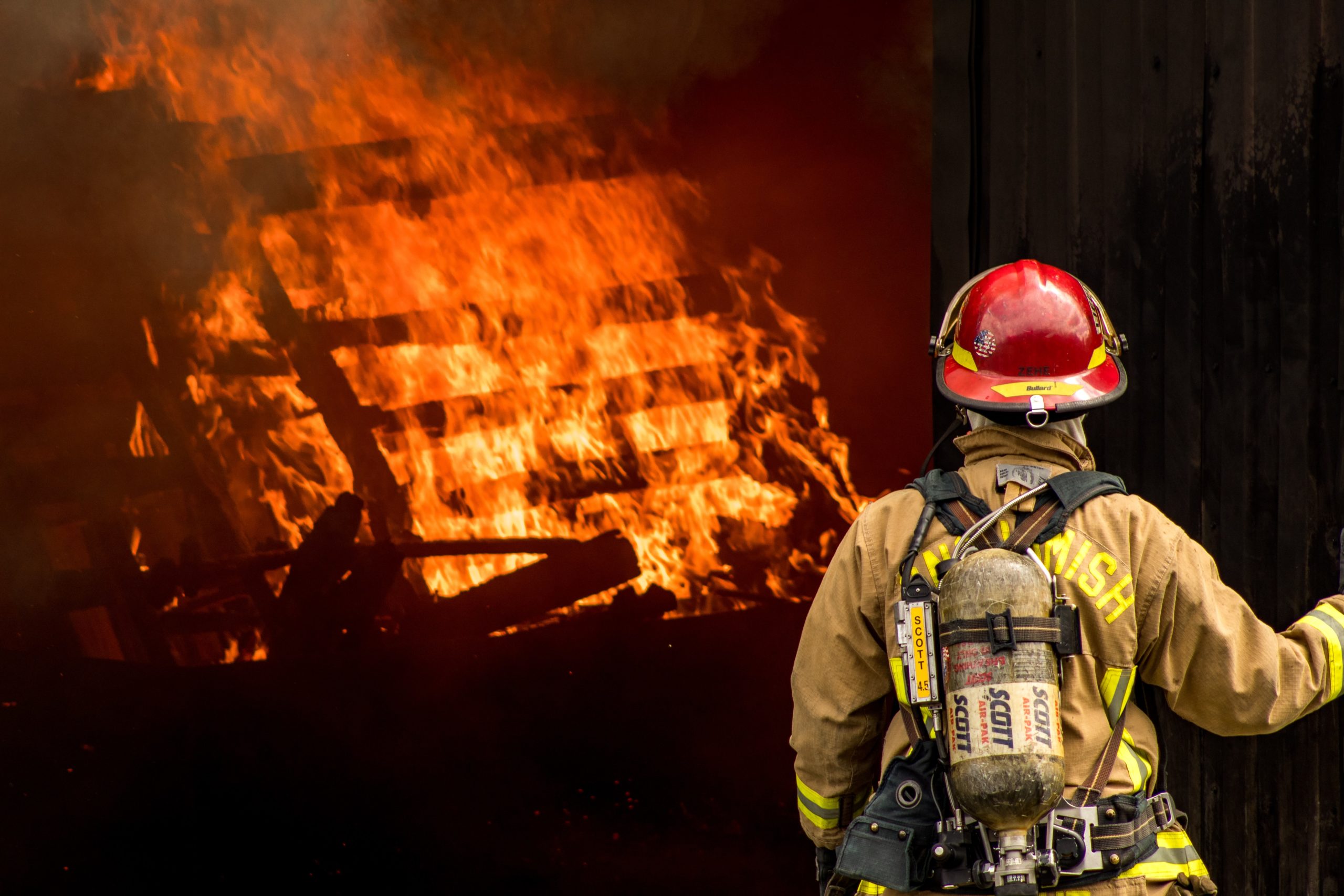
En cas d’accident réel de type feu de batterie dans un local industriel, la conduite à tenir est la suivante :
- call for help
- ensure people's safety and protect them,
- Do not spray water on the battery without a fire hose,
- Do not inhale the fumes, which are toxic.
In the initial moments, a fire blanket can be used as a preventive measure to reduce the risk of fire; however, this initial action soon becomes too dangerous for the responder.
Gesip's actions to address the risk of battery fires: training and development of technical guidelines
Qu’il s’agisse d’une formation de type formation initiale ou d’un recyclage, Gesip peut apporter aux industriels, son expertise sur des formations variées. Grâce à des stages en conditions réelles, les formations de Gesip préparent les équipes afin qu’elles soient en mesure d’intervenir en toute sécurité face à un incendie industriel.
Gesip also offers its expertise in the development of technical guides and fire risk analyses. The next technical guide will focus specifically on energy storage systems (ESS). It will soon be available in the Gesip online store.