
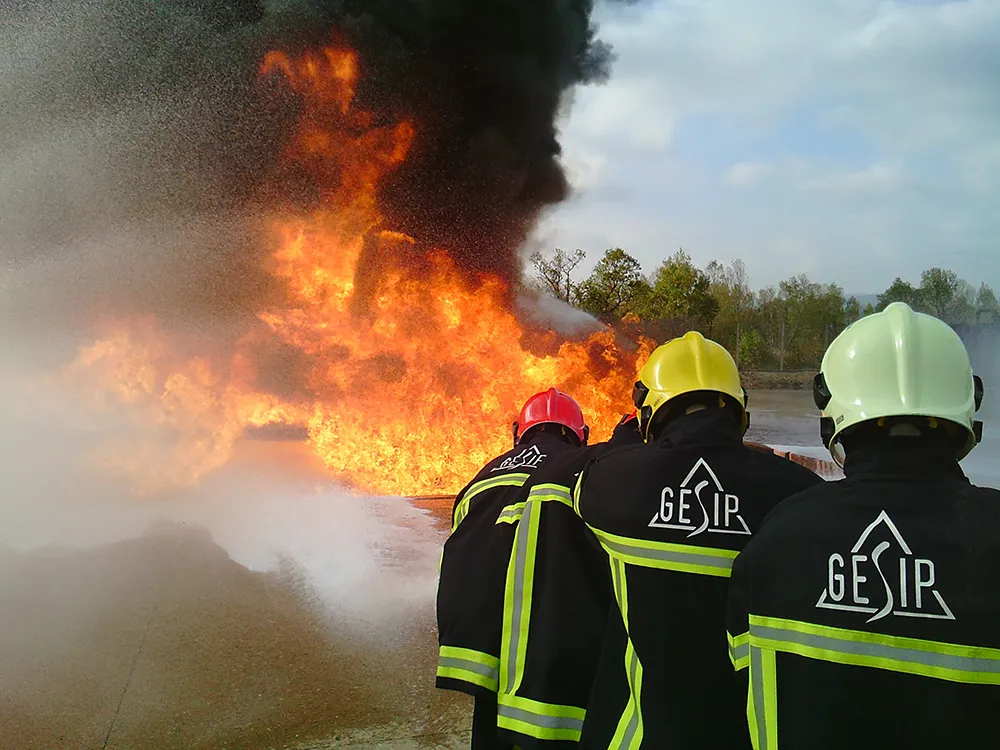
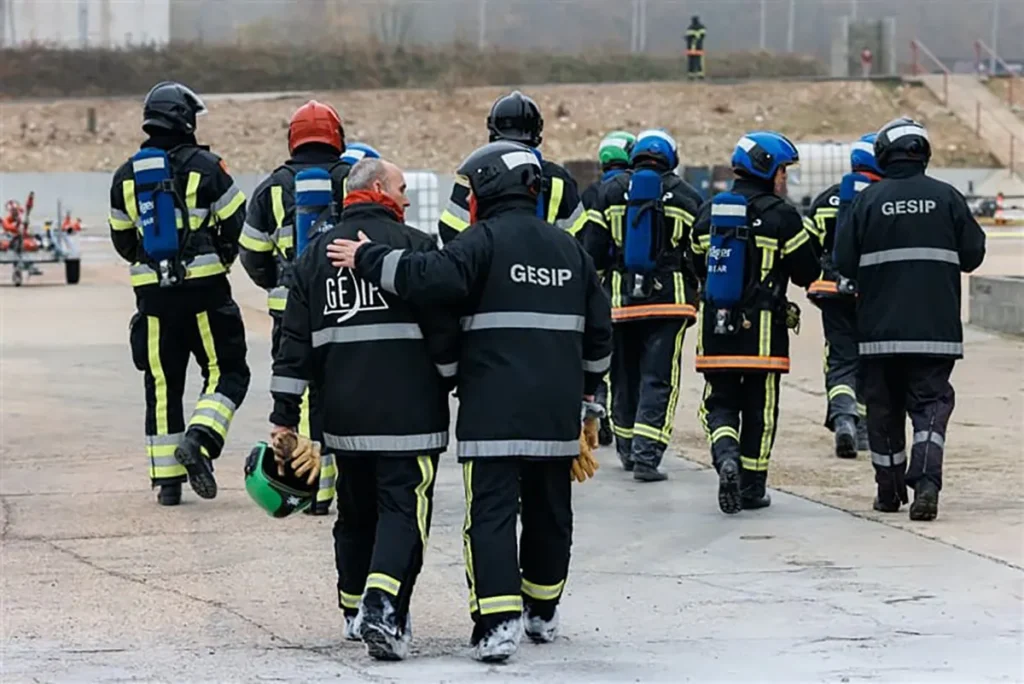
In the event of an industrial accident, the failure does not always stem from the equipment or the safety system. It can occur at the moment a decision is made, when technical signals are interpreted, prioritized, or disregarded under time pressure.
For communication in industrial crisis management, cognitive biases thus constitute a risk factor in their own right, capable of influencing the interpretation of alarms, the selection of corrective actions, and the implementation of emergency procedures.
Feedback confirms the importance of the human factor in major industrial accidents . According to the INRS and several leading international organizations in process safety, 70 to 80% of serious industrial incidents involve a human or organizational component, often linked to errors in judgment, communication, or coordination, rather than to a purely technical failure.
These errors occur primarily during transient phases: degraded conditions, startup, shutdown, or incident management.
Data from BARPI (the Office for the Analysis of Industrial Risks and Pollution) confirm that errors in judgment and decision-making biases are involved in more than 60% of accidents recorded at classified facilities.
Gesip accompagne les industriels pour anticiper ces défaillances décisionnelles : identifier les moments critiques où les biais s’activent, tester la résistance des protocoles face aux signaux contradictoires, et former les équipes à maintenir la rigueur analytique sous pression.
For security officers and crisis managers, the challenge is therefore not merely to have high-performance technical systems in place, but to securing the decision-making process itself. This requires understanding how individual and collective cognitive biases can interfere with the analysis of sensor data and the rigorous application of reference documents, particularly when activating the Internal Operations Plan (IOOP) and associated response plans.
Industrial incident: cognitive biases and human factors
Definition of Cognitive Biases and Their Impact on Industrial Safety
Cognitive biases are systematic distortions in the way the human brain processes information.
They enable quick decision-making in emergency situations, but can compromise the rigor required in a high-risk industrial setting.
They are based on heuristics (mental shortcuts) identified by Amos Tversky and Daniel Kahneman in 1974.
In an industrial setting, this can result in misjudgments of incidents, inappropriate decisions regarding the sequence of corrective actions, or underestimation of the risks to operators and facilities.
What the guidelines and regulations on human factors say
Cognitive biases and human factors are not merely a theoretical issue: they are embedded in major standards and regulations.
- ISO 31000:2018 on risk management : requires organizations to be mindful of the human and cultural factors that influence decisions at all levels.
- ISO 45001:2018 on occupational health and safety management systems : requires that hazard identification take into account human factors such as human capabilities, limitations, and other characteristics.
- INERIS Guide DRA-11 “Organizational and Human Factors in Industrial Safety”: presents a methodology for analyzing these factors, recognizing that human performance in degraded situations depends largely on the ability to identify and control cognitive biases.
- Seveso III Directive (2012/18/EU) : requires that the safety management system must include an assessment of risks related to organizational factors.
- Decree of May 26, 2014, on the prevention of major accidents: transposes these requirements, requiring operators of high-risk facilities to incorporate the analysis of organizational and human factors into their safety management systems.
The most common cognitive biases in times of industrial crisis
Certain biases are particularly evident during on-site incident management:
Confirmation bias : the tendency to select information that confirms an initial hypothesis, even if the data contradicts that perception.
Example: An operator interprets multiple alarms as minor anomalies because a similar incident in the past was minor.
Availability bias : giving undue weight to recent or significant events when assessing risk.
Exemple : Un accident récent influence la décision sur un incident actuel, alors que les données objectives montrent un profil différent.
Halo effect : the tendency to form an overall judgment of an incident based on a single positive or negative indicator.
Example: Equipment that appears to be in good condition may conceal critical defects that can only be detected through sensors or technical inspections.
Anchoring bias : giving priority to the first information received, which can influence the sequence of actions defined by the crisis management team.
Example: The initial field report mentions a “minor leak.” This initial characterization shapes the perception of severity, even when subsequent analyses reveal significant toxic exposure requiring evacuation.
Normalization bias : gradual downplaying of risk, contrary to the monitoring and reporting requirements of ISO 31000.
Example: Repeated exceedances of pressure thresholds in a facility are tolerated because “it has never been a problem.” This normalization masks a gradual deterioration leading to catastrophic failure.
Authority bias : following the chain of command without verifying metrics, which can compromise staff safety and regulatory compliance.
Example: The site manager states, “It’s under control; there’s no need to evacuate.” However, the operators observe alarming readings but do not dare to contradict their superiors, delaying the implementation of emergency procedures.
Groupthink : the group’s tendency to converge toward a flawed consensus, contradicting structured decision-making methods.
Example: During a crisis meeting, several members have doubts about the proposed strategy but remain silent to avoid conflict. The decision made collectively ignores warning signs that had been identified individually.
L’expérience de Gesip auprès des industriels montre que ces biais ne se manifestent pas isolément : en situation de crise, plusieurs d’entre eux peuvent s’activer simultanément, amplifiant les risques d’erreur décisionnelle.
For security officers and crisis managers, identifying and managing these biases is essential.
Gesip accompagne les industriels pour réduire l’impact des biais cognitifs dans les situations accidentelles par l’audit des processus décisionnels pour détecter les points de vulnérabilité, la formation ciblée des équipes pour reconnaître et neutraliser les biais, et la mise en place de protocoles décisionnels robustes garantissant la sécurité des collaborateurs et la continuité opérationnelle.

Preventing decision-making errors caused by cognitive biases
Structured Decision-Making Protocols: Fundamental Principles
How can you avoid making a judgment error in a crisis management team? The managing cognitive biases in emergency situations relies on the implementation of standardized decision-making processes. Safety officers and crisis managers must rely on:
- Clear and structured protocols, defining the validation steps for critical actions. These protocols must specify who validates what, when, and based on which measurable technical criteria.
- The systematic correlation of information from industrial sensors, monitoring systems, and alerts from field teams. Any critical decision (emergency shutdown, evacuation, or call for outside assistance) must be based on at least two independent sources that confirm the same analysis.
- The use of decision-making checklists specific to each type of incident, reducing the risk of impulsive or biased reactions. These checklists require a pause and structured thinking before taking action, even under intense time pressure.
In practice, these tools help prevent hasty decisions about whether to shut down or restart a machine, ensure that maintenance tasks are properly prioritized, and secure critical areas for employees.
TheGesip audit identifies instances where these protocols are missing or insufficiently formalized, and works with teams to develop tools tailored to their operational context.
Mastering Crisis Communication and External Communications
The rapid spread of information can amplify cognitive biases and undermine decision-making. To mitigate these effects, several principles must be followed:
- Centralization and filtering of information flows internal and external before any dissemination. One member of the crisis response team should be specifically tasked with monitoring informal channels and assessing the signals based on their criticality and reliability.
- Standardized communication, ensuring that only validated and consistent messages are conveyed to teams and stakeholders. Crisis communication templates crisis communication save time and prevent contradictory messages that would fuel uncertainty.
How does safety training help counteract cognitive biases?
Une formation théorique seule ne suffit pas toujours à neutraliser les biais cognitifs — biais de normalité, surconfiance, effet tunnel… — qui influencent la perception du danger : ces mécanismes apparaissent surtout lorsqu’un incident réel survient.
C’est pourquoi la formation sécurité industrielle proposée par Gesip combine apports théoriques, retours d’expérience et exercices pratiques en conditions proches du terrain. Cette approche permet aux professionnels de mieux comprendre leurs réflexes mentaux et de renforcer leur capacité de décision face aux risques industriels.
Scenarios that closely resemble real-world industrial settings
Gesip’s technical facilities, located in Vernon (Eure) and Roussillon (Isère), are full-scale industrial facilities designed for immersive scenarios. These simulations place teams in conditions that closely resemble an industrial crisis management situation. They make it possible to uncover the cognitive biases that emerge under pressure and to instill the operational reflexes needed to prevent incidents.
Practicing decision-making under pressure
During a fire or industrial accident, stress leads to mental shortcuts. The exercises replicate the time constraints, uncertainty, and complexity found in real-life emergency situations. This allows participants to identify and correct certain biases while developing essential skills for managing critical situations at industrial sites.
Debriefing: Turning Experience into Learning
Structured debriefings make it possible to understand the cognitive mechanisms at work and draw lessons that can be applied in the field after analyzing the decisions made and the biases observed.
In addition, Gesip training also helps foster a culture of collective safety. By sharing their feedback, teams learn to better detect early warning signs and adopt consistent behaviors when faced with industrial risks.
Operational Summary
Mitigating the effects of cognitive biases is not merely a matter of following a theoretical protocol. It involves establishing a robust decision-making framework, where decisions are always grounded in technical data and safety metrics, communications are standardized and validated to reduce noise, and teams are trained and prepared to respond rationally under pressure.
This approach reduces the risk of accidents, ensures employee safety, and guarantees the operational continuity of the industrial site.
Similarly, social media serves as an additional catalyst for cognitive biases during industrial crises. The speed at which unverified information spreads and the emotional pressure it generates can override even the most robust decision-making protocols. Rumors, incomplete videos, and unsubstantiated accounts: these noise signals fuel availability bias and groupthink within the crisis management team itself. Explore the analysis of this phenomenon: How do social media amplify cognitive biases in industrial crisis management?
For further reading
Would you like to discuss your specific challenges related to crisis management and human factors?