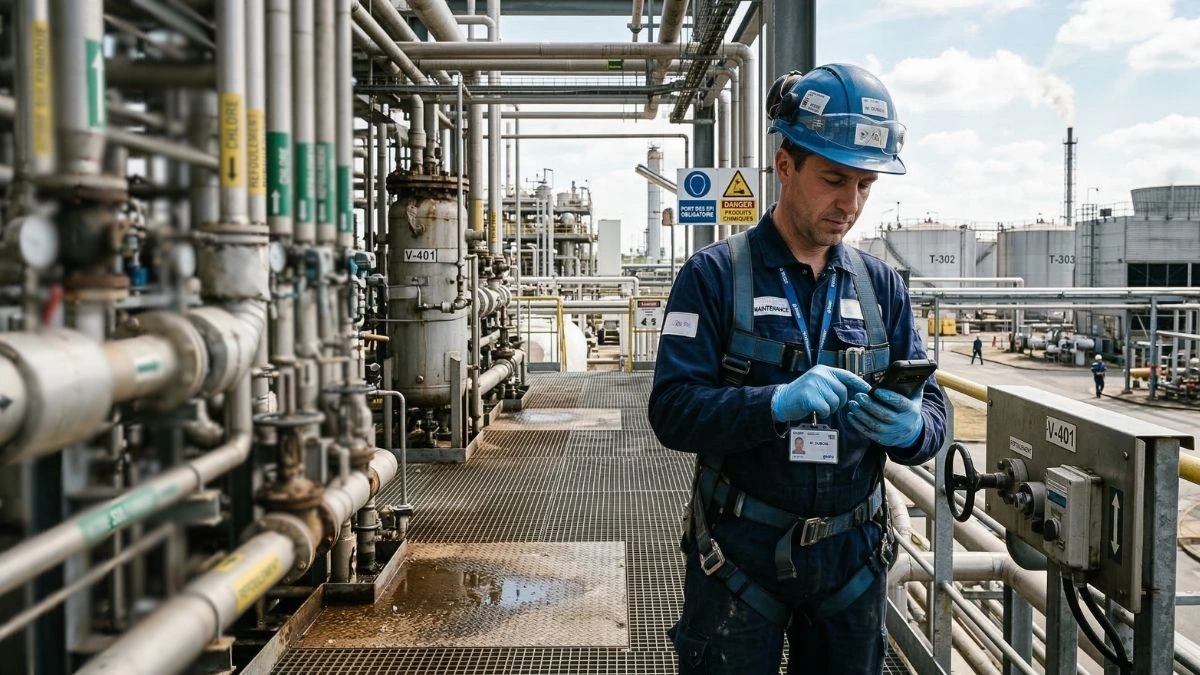
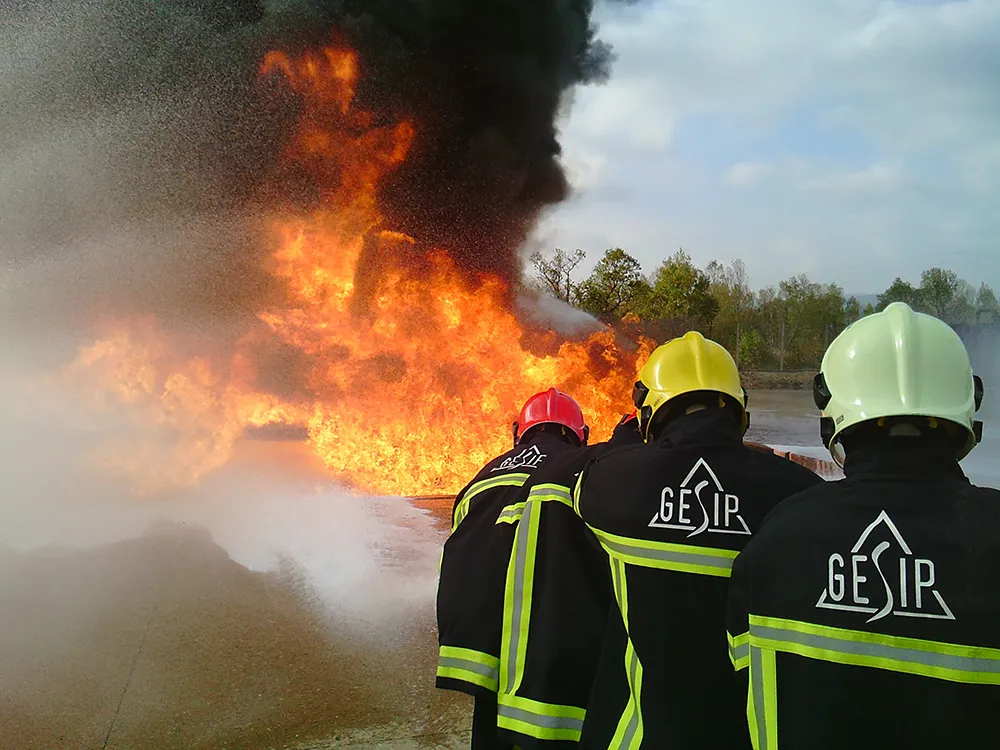
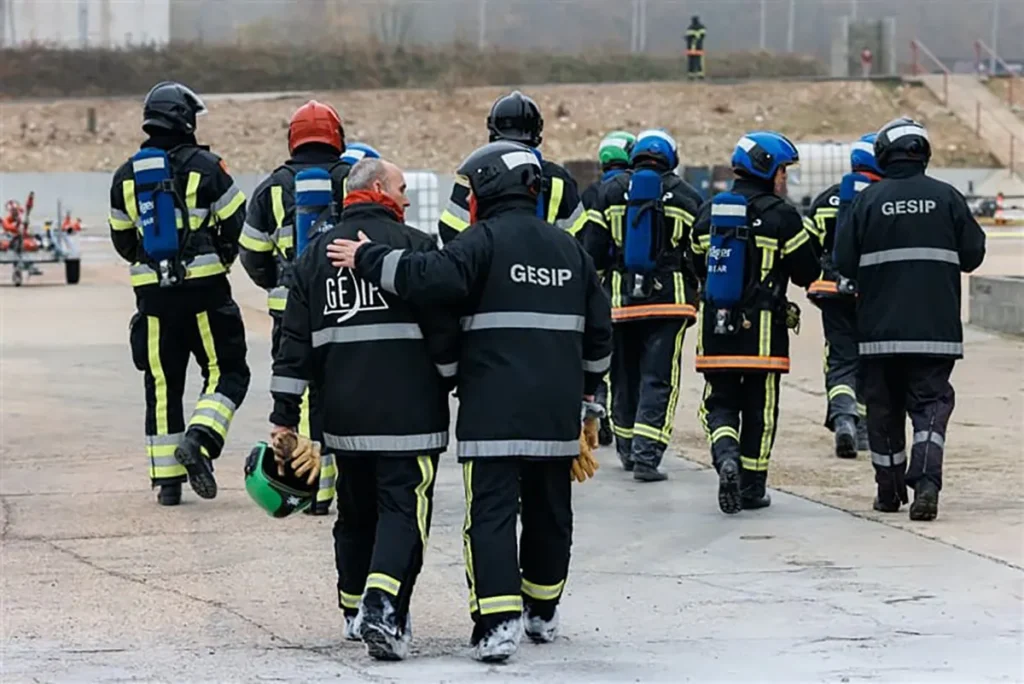
In the chemical and petroleum industries, managing a hazardous substance spill involves:
- The selection of personal protective equipment (PPE) appropriate for the identified chemical hazards;
- Respiratory conditions (ARI, ARICO, ARF)
- Protective gear (gloves, boots, helmets)
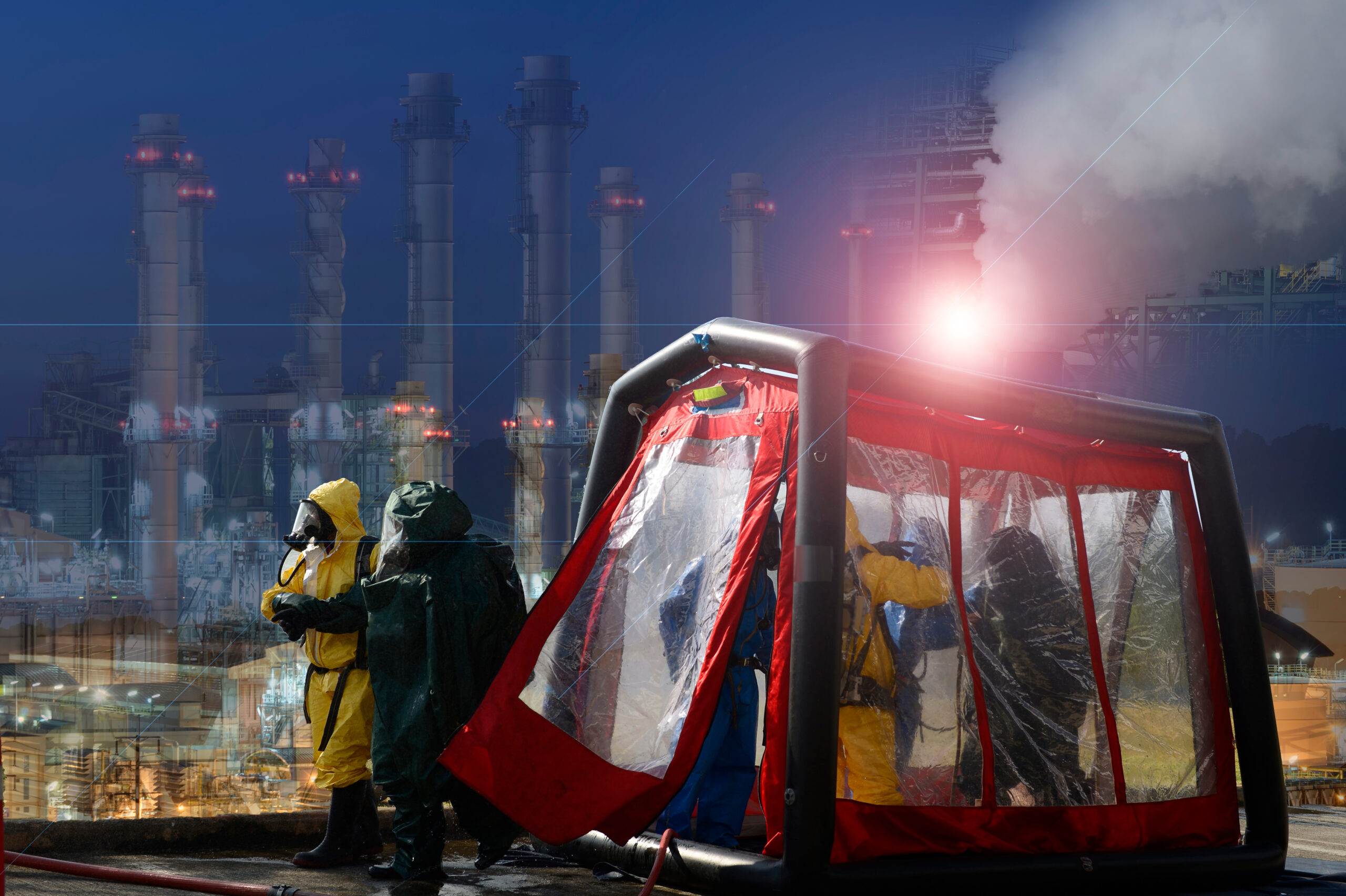
- Body (VPC type 6 to 1)
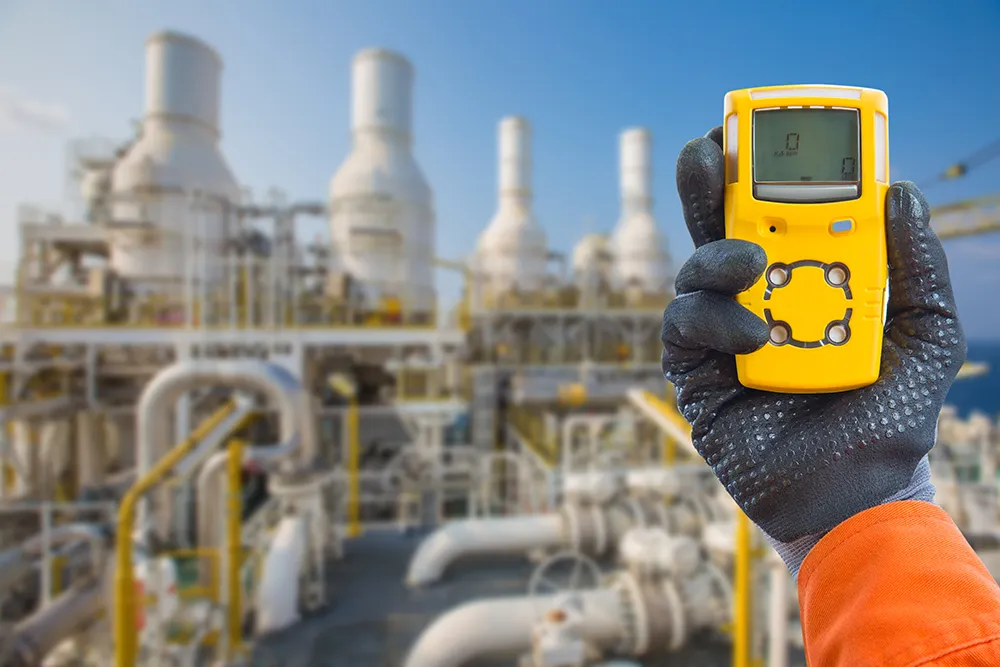
- The availability of response equipment (detection, containment, collection, etc.);
- A chemical spill response procedure based on risk analysis, operational zoning, appropriate actions targeting the source, flow, and target (sealing, containing, and collecting), as well as an effective decontamination process;
- L’entretien des EPI et matériels d’intervention répondant aux préconisations du fabricant et aux normes en vigueur ;
- Training on the use of PPE and equipment for all personnel, as well as training on operational management and command for supervisors.
Recognized as a leading expert in industrial safety and risk management, Gesip supports industry professionals with proven methodologies and specialized training. Discover best practices derived from this expertise to ensure the successful deployment of emergency response equipment in the event of a hazardous material leak or exposure to toxic substances.
What PPE should be used in the event of a chemical spill or leak?
How do you choose the right chemical protective clothing?
The chemical protective clothing (CPV) is essential for protecting responders from contamination in the event of exposure to a chemical.
- Type 1a, 1b, 1c : Impermeable to gases, vapors, and liquids, they are recommended for work involving highly toxic or corrosive substances.
- VPC 1a: The ARI is housed inside the VPC, thereby providing additional protection against contamination.
- VPC 1b: The ARI is located outside the VPC and is not protected against contamination.
- VPC 1c: The VPC receives a supply of breathing air through a hose connected to a remote breathing air source.
👉 This PPE is Category 3, designed for serious or potentially life-threatening risks.
- Types 3 through 6: They provide protection against risks ranging from exposure to splashes (Type 6) to complete protection against pressurized liquids (Type 3).
Criteria for Choosing the Right Mail-Order Company
- Skin type and permeation resistance: It is essential to consider the class of chemicals to which the wearer may be exposed. This involves assessing the time it takes for a substance to pass through the protective material, which is rated on a scale of 1 to 6.
- Suitability for the work conditions: The PPE must be appropriate for the wearer’s size, the potential space constraints, and the expected duration of exposure.
What type of respiratory protection should be used in the event of a chemical leak? SCBA or filtering facepiece respirator?
Respiratory protective equipment falls into two main categories: filtering and isolating. It is essential when working in environments with toxic atmospheres or harmful vapors.
Filtering respirators (FR)
Gas and aerosol filters, available in various classes (P1 to P3), provide protection levels tailored to the type and concentration of pollutants.
⚠️ They are ineffective and prohibited in low-oxygen environments.
In practice, it is difficult to predict how long they will last: it depends on many factors, such as:
- The concentration of pollutants in the air,
- Humidity and atmospheric pressure,
- The wearer's respiratory rate and the volume of air inhaled.
Self-contained breathing apparatus
SCBA units supply the wearer with compressed breathing air stored in a self-contained cylinder. They provide complete protection against toxic gases, vapors, or aerosols by forming a completely airtight barrier between the ambient air and the respiratory tract.
- Open-circuit (ARICO) devices are the most commonly used for emergency procedures.
- Closed-circuit ( ARICF ) systems are suitable for more specialized use in confined spaces or during long-duration operations.
👉 They are classified as Category 3 PPE because they are designed to protect against serious or potentially life-threatening risks.
The range of ARI vehicles depends on several factors:
- The cylinder capacity (expressed in liters of water) and its filling pressure (for ARICO cylinders);
- The intensity of the physical effort exerted by the carrier;
- The wearer's breathing rate and tidal volume.
Specialized PPE for the extremities: What should you wear in the event of a chemical spill?
What kind of gloves should you wear when handling chemicals?
Gloves should be selected based on the type of substances being handled: acids, bases, solvents, hydrocarbons, etc.
When selecting waterproof gloves for handling chemicals, it is essential to check their resistance to permeation as well as their mechanical strength.
👉 Standards such as EN 374 and EN 388 help guide the selection of chemical-resistant gloves based on the required performance.
How do you choose safety boots for chemical protection?
Chemical-resistant boots or overshoes must be liquid-tight, slip-resistant to prevent falls in contaminated areas, and sometimes antistatic in environments with a risk of explosion (ATEX zones).
Some boots are specifically designed to be compatible with sealed chemical-protective suits, thereby ensuring the continuity of the protective barrier.
Helmet or protective headgear for protection against chemical hazards
Among protective clothing designed to guard against chemical hazards, hard hats are essential when there is a risk of falling objects, chemical splashes, ormechanical impacts.
These models of personal protective equipment may be equipped with built-in visors or removable face shields.
There are also disposable head covers designed for use in confined or highly contaminated environments
What does a chemical response kit contain?
A complete chemical response kit must contain:
- PPE appropriate for the hazards and risks
- Screens, shutters, and clamps to contain leaks, or any other means of containing contamination
- Tools and, if necessary, ATEX-certified equipment
- Marking equipment for delineating the work area
- Highly absorbent neutralizing agent,
- First aid supplies,
- Specialized waste containers,
- Detection systems,
- Communication devices.
Chemical Spills: Steps for a Safe Response
Procedure for donning protective gear before a chemical operation
A strict donning procedure is essential before any work begins to ensure the effectiveness of PPE and prevent exposure to toxic substances.
- Before dressing:
- Check that the VPC is suitable for the product in question and the wearer's size.
- Verify its integrity.
- Prepare the ARI by performing the standard safety checks: pressure, integrity, etc.
- While getting dressed:
- Get help to avoid mistakes.
- Put on the thermal gloves first, then the chemical-resistant gloves, and finally the work gloves.
- Before entering the exclusion zone, put on the SCBA and securely close the VPC.
- After dressing:
- Check the fasteners.
- Test the pressure relief valve(s).
- Remove all pockets and folds where substances could accumulate.
- For VPC 1b units, perform a valve stalling test upon request
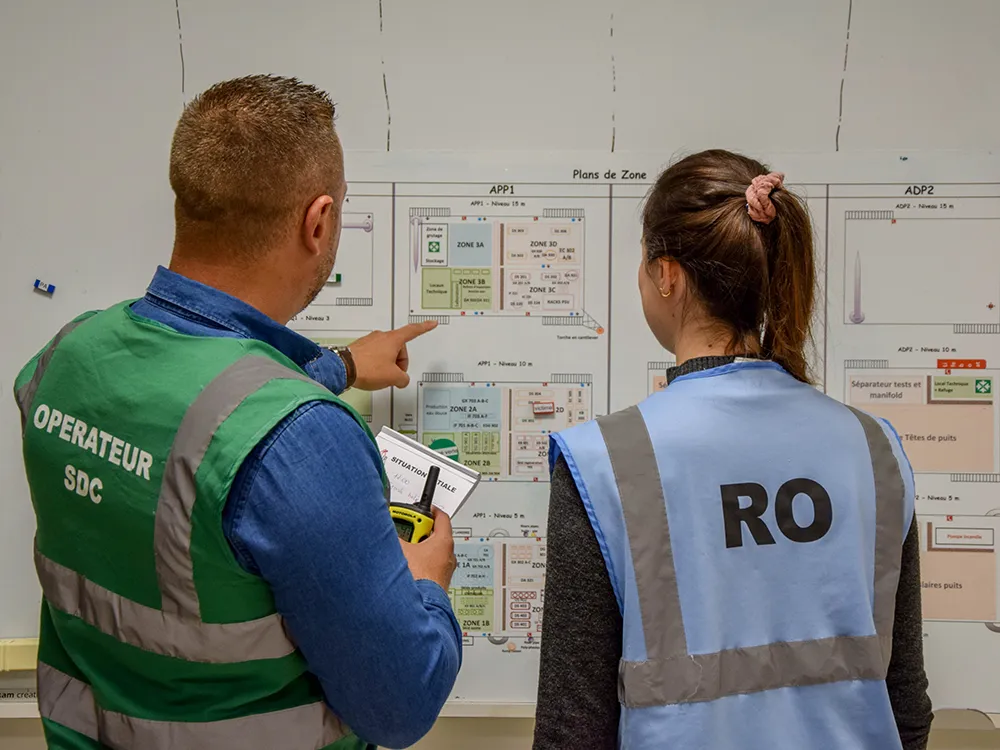
Chemical hazards, workplace analysis, and precise safety zoning
An in-depth analysis of the incident scene must take the following factors into account:
- Risks associated with fluids: Toxicity, corrosiveness, pressure, and temperature of the chemical in question.
- Immediate surroundings: Presence of equipment, pipes, or conduits that could exacerbate the situation.
- Weather conditions: In particular, wind direction and speed, as well as ambient temperature, which influence the dispersion of gases or vapors.
Once the analysis is complete, the safety zone divides the response area into three sections to ensure the safety of responders and prevent widespread contamination:
- Restricted area: An area where a hazard is present. Access is limited to personnel equipped with specific PPE.
- Controlled Zone: The area between the exclusion zone and the support zone. It houses decontamination facilities and requires intermediate-level PPE.
- Support Area: Location of logistical resources and the forward command post (FCP).
Implementation of tools to bring the situation under control
To contain a chemical spill and minimize its impact, responders deploy specialized equipment tailored to the nature of the incident:
- Sealing techniques: The method used to seal leaks depends on the substance involved. Clamps, hose clamps, and sealing pads can be used to temporarily stop the flow of pressurized gas or toxic or corrosive liquids.
- Detection systems: Monitoring hazardous gases, pH levels, or pollutant concentrations provides real-time data to help adjust the response strategy.
- Containment equipment: Absorbent booms, tarps, and foam mats prevent the spread of hazardous substances, thereby reducing environmental risks.
Specialized training in chemical response is essential to ensure that equipment is used properly and that teams respond appropriately.
Communication in a contaminated environment
When a responder wears a full-body protective suit, their visibility, hearing, and ability to speak are limited, making communication in contaminated areas dependent on protocols for team coordination, such as sign language, integrated communication systems, or the use of signage. These codes must be incorporated into response protocols.
Decontamination, maintenance, and storage of chemical protective equipment
After responding to a chemical spill, thorough decontamination is essential to remove toxic residues and prevent cross-contamination.
Decontamination procedure for PPE and CPE:
- Initial rinsing: Primary rinsing with water; water is the primary decontamination agent and is particularly effective on soluble substances.
- Exterior cleaning of VPCs: Application of a neutral solution suitable for the contaminants.
- Cleaning the interior of VPCs: Use a soapy solution to remove sweat and residual marks.
- Neutralization: Depending on the contaminant, specific reagents are applied before the final rinse to neutralize hazardous substances.
- Post-decontamination inspection :
- Visual inspection of VPCs to detect cracks or damage.
- Leak test to verify that the product is safe for reuse.
- Replacement of clogged filters and inspection of moving parts in the ARI units.
Optimal storage of chemical protective equipment:
- Store the equipment in a clean, dry, and secure area, away from direct sunlight.
- Avoid creasing and keep mail-order items in their original packaging.
- Periodically inspect the condition of the equipment before reusing it.
Training in Response to Chemical Leaks and Spills
💡 Develop expertise in chemical spill response with the chemical spill response training offered by Gesip:
- Improved chemical risk assessment: Understanding the toxicity, reactivity, and safe storage conditions of chemicals by reviewing safety data sheets (SDS).
- Proficiency in protective equipment: Procedures for donning, using PPE (VPC, SCBA), and decontaminating equipment after an incident.
- Implementation of response procedures for chemical spills: Adherence to the steps outlined in the emergency plan, safety zoning, and the 4T method (Tactics, Techniques, Tools, and Protective Gear).
- Communication in a contaminated environment.
Conclusion: The deployment of chemical response equipment requires a thorough understanding of the equipment, procedures, and communication protocols.
🎯 Need training on chemical spill management? Contact Gesip to learn about our specialized modules!