

Roger Bergougnoux, a consultant for Gesip, answers our questions to reflect on his extensive experience in the field of security. He tells us about the skills he has acquired throughout his career and has been able to put to good use through his consulting assignments with Gesip since his recent retirement.
Tell us about your career path.
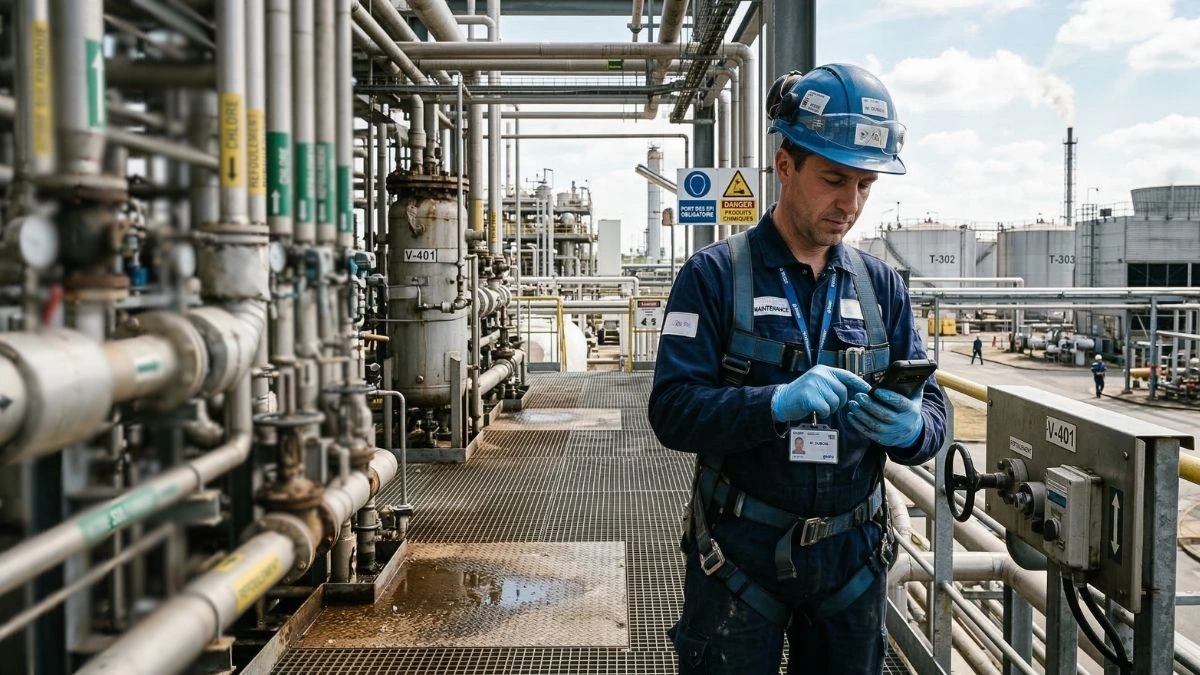
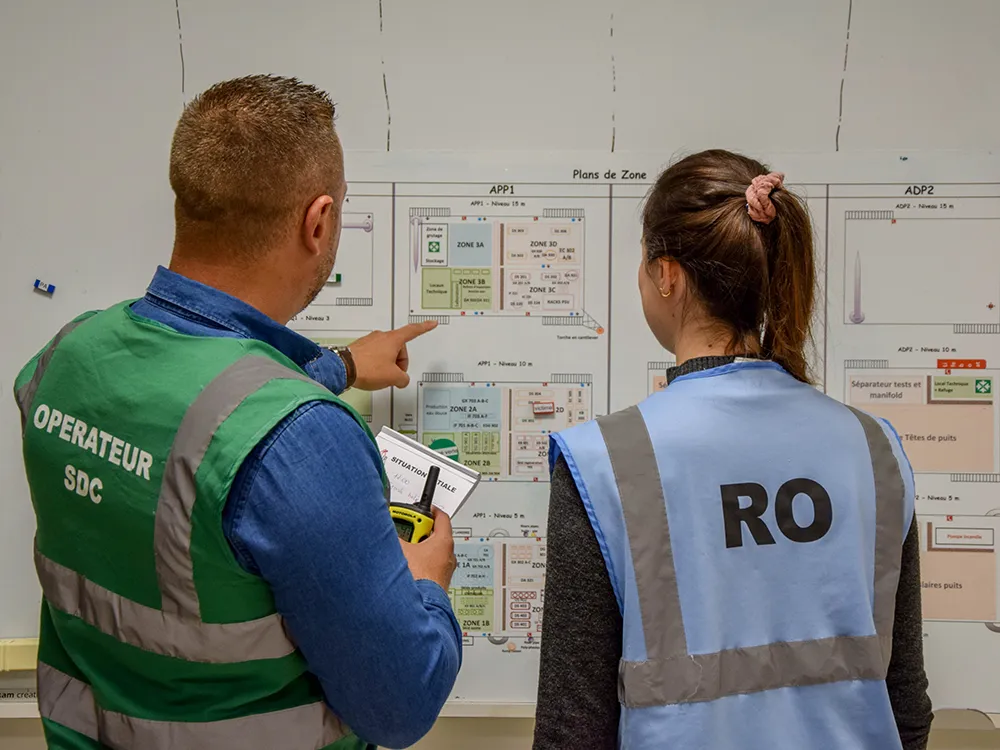
I began my career in 1974 in the refining industry. I worked my way up through the ranks in production, starting as an operator and eventually becoming a shift supervisor. As a shift supervisor, I had the opportunity to gain experience in every role within a refinery. It was a time of major transformation in the refining industry. I then shifted my focus to operational safety and the implementation of the POI.
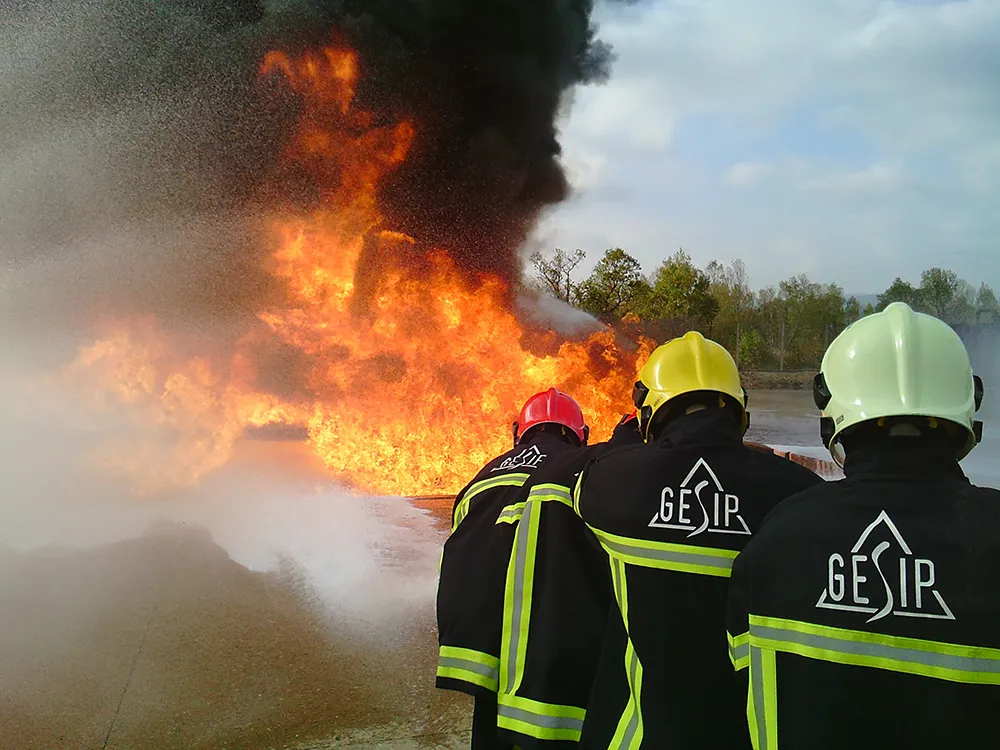
J’ai accumulé une très longue expérience au cours de laquelle j’ai vécu tous les événements et incidents majeurs qu’une raffinerie peut connaître en 34 ans de vie : des feux réels aux épisodes de pollution. Je garde en mémoire des événements même oubliés comme la rupture à froid des équipements. En tant que surintendant, j’ai été amené à remplacer le directeur du site m’offrant une nouvelle approche enrichissante.
How did you get started in this consulting career? Why did you decide to work with Gesip?
I joined the Gesip consultant pool three months after I retired. At the time, my professional work was primarily focused on the field of security. Given my extensive experience with major incidents, I felt the desire to put that experience to good use.
I knew Christian Bouchard, Gesip’s treasurer, who became my sponsor. We had developed some of the scenarios together for POI exercises. I had also participated in the working group that designed Gesip’s response guide in the 2000s. I had also completed the Risk Analysis training and conducted many training sessions for companies working on-site.
What would you say to young retirees who are interested in a career as a Gesip consultant?
Gesip quickly drew me in with a number of exciting assignments. On each assignment, I bring Gesip’s culture with me, but I try to adopt the local language and familiarize myself with the practices and unique characteristics of each site.
Being a consultant for Gesip means working with a focus on listening. It’s not about imposing practices, but rather about suggesting improvements and training based on the Gesip guide.
La fonction de consultant chez Gesip m’a amené à évoluer et à acquérir une vision totalement différente notamment en ce qui concerne la réglementation. Cela permet de rester à jour des connaissances et du suivi législatif. Il est important de ne pas rester sur ses acquis et de se remettre sans cesse en cause. Le retour d’expérience est crucial, cependant, il ne suffit pas, il est également essentiel de connaître les actualités et les évolutions prévisibles.
To keep myself up to date, I’m a member of a CSS—a monitoring committee that includes many companies—where we review changes in legislation. I also participate in Gesip feedback sessions with technical training teams. In that capacity, I attended the feedback session for Lubrizol. As a result, I have several perspectives, including Gesip’s and the one provided by the training session led by the DGPR.
My approach as a Gesip consultant is also quite different because of my status as a retiree. Retirement is a fresh start toward something new, allowing me to get involved in different ways and not be subject to pressure from the hierarchy. I don’t have the same obligations as I did during my professional career in the refining sector. I work in a wide variety of fields, at a diverse range of sites. I’m here to spread the Gesip message by sharing my experience.
Working with Gesip means you don’t get stuck in repetitive training; instead, you can reinvent yourself through opportunities to get involved in new projects and meet interesting people.
What assignments have left the biggest impression on you during your career at Gesip?
I’ve had to travel abroad regularly, and that’s also what makes Gesip so interesting—the chance to engage with different cultures.
I remember POI exercises in Tunisia, in the desert below Matmata, at a gas compression station. What made this site unique was the three languages used: Arabic was used by the field staff, French was used to report information back to headquarters in Tunisia, and English was used to debrief with senior management in London.
Another benefit of Gesip assignments, as I mentioned, is the opportunity to join a training program where everything is new and unexplored, with no connection to refining—as was the case when I participated in the first training sessions for wastewater treatment plants, during which I made promising contacts at a safety meeting with management. My efforts led to Gesip being called in to assist various companies and organizations.
In Douala, I was also part of a Gesip mission alongside Valéry Bonte. We responded to a site with very few supplies for the procedures: a few drums of foam concentrate, no smoke hoods. Just to lighten the mood, we suggested they have some smoke hoods knitted for them, and that helped break the ice, despite the cultural differences. They understood that we weren’t there to overwhelm them with heavy equipment but to help them realize they had the means to perform initial response actions. By the end of the training, we were all speaking the same language. The Cameroonians asked us very specific questions. I had the opportunity to meet with intellectuals in their field and engage in very interesting discussions.
How can I balance my personal life with my work as a Gesip consultant?
I schedule my training sessions with Gesip so that I can balance them with my other activities and family life.
J’exerce un deuxième mandat de maire dans la commune de Lanquetot. A ce titre, je suis actuellement impliqué dans la construction de logements inclusifs mêlant différentes générations. Je viens aussi d’assister à l’inauguration d’un camion itinérant épicerie, un commerce en circuit-court et biologique.
I am also a community council member and serve on several national think tanks. I help organize Risk Awareness Day in collaboration with the DGPR (Directorate General for Risk Prevention).
As someone who loves to travel, I’ve already visited the American West, Florida, Canada, Greece, and more. Beyond my international assignments, working with Gesip has allowed me to discover French cities I wouldn’t have visited otherwise—such as Annecy, Strasbourg, and Dijon—as well as many regions, including Ardèche and Burgundy. Especially since Gesip meetings are always a chance to enjoy a fantastic atmosphere.
When I joined Gesip, I wrote a book—partially funded by Gesip—about tall ships in Normandy.
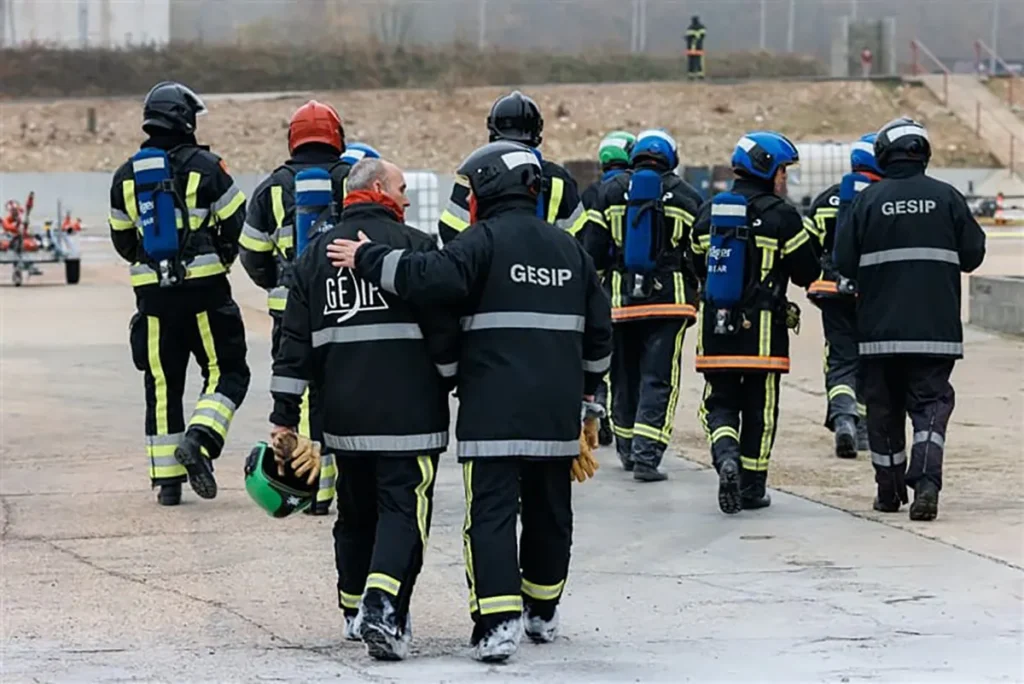
Gesip leverages its knowledge of industry events and the sharing of experiences to enhance the safety of people and equipment in the industrial sector. We are seeking new consultants to apply their skills and expertise in a wide range of rewarding audit and training assignments. Join us and contribute to a project of major importance.