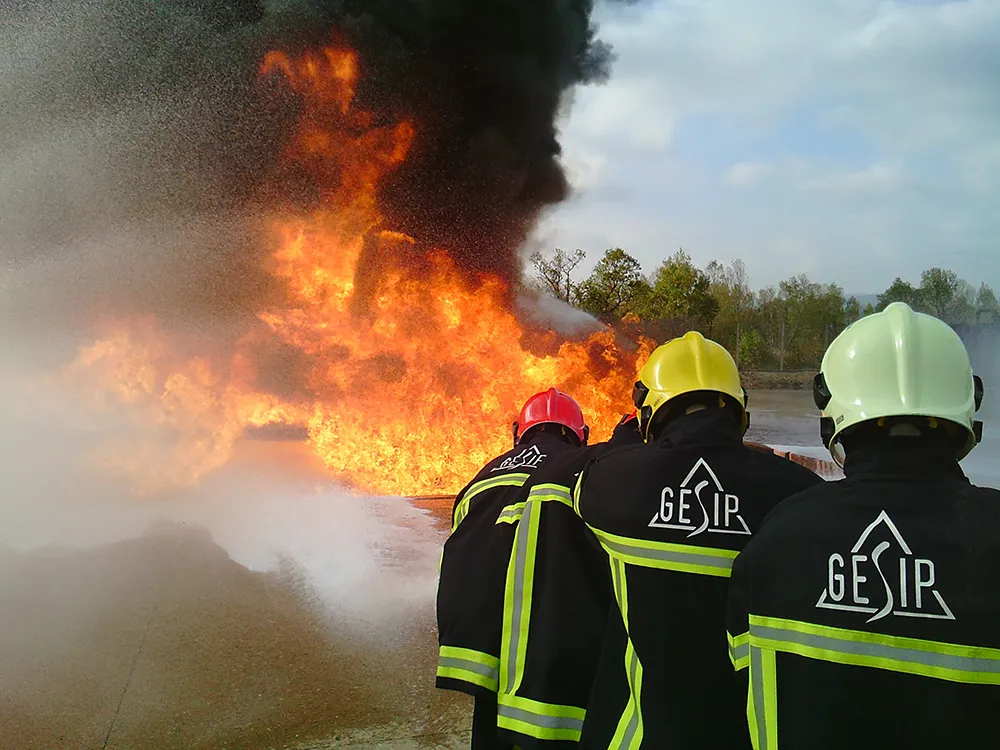
A pool of flammable liquid on fire is one of the greatest industrial hazards. To contain this type of threat, there is only one possible solution: the application of a foam solution. A mixture of water and foam concentrate, this foam solution must be applied with precision to both extinguish the fire quickly and ensure sufficient reserves are available to restore a lasting safe condition. To ensure you never run out of these essential firefighting resources, calculating the optimal application rate is essential.
Application rate: definition
The application rate is the amount of the mixture of water and foam concentrate sprayed onto a flammable liquid fire. It is calculated based on the volume of liquid sprayed, relative to the burning surface area, and over time. It is therefore expressed in liters per minute per square meter (L/(min·m²)).
What factors influence the implementation rate?
Le taux d’application de la solution moussante dépend de différents facteurs qui sont pour certains anticipables. Mais certaines caractéristiques propres aux incendies de liquide inflammable obligent à un calcul de taux d’application précis et cohérents. Le choix de l’émulseur et de son fabricant qui en donne des consignes spécifiques d’utilisation sont, par exemple et par définition, des éléments connus. Au contraire, l’accessibilité du feu, la facilité avec laquelle l’application de la solution moussante va pouvoir être réalisée ou encore la météo ne sont pas toujours prévisibles.
The six main factors that determine the application rate are as follows:
- the type of flammable liquid: polar or nonpolar hydrocarbon
- the type of foam concentrate available
- the type of equipment to be protected
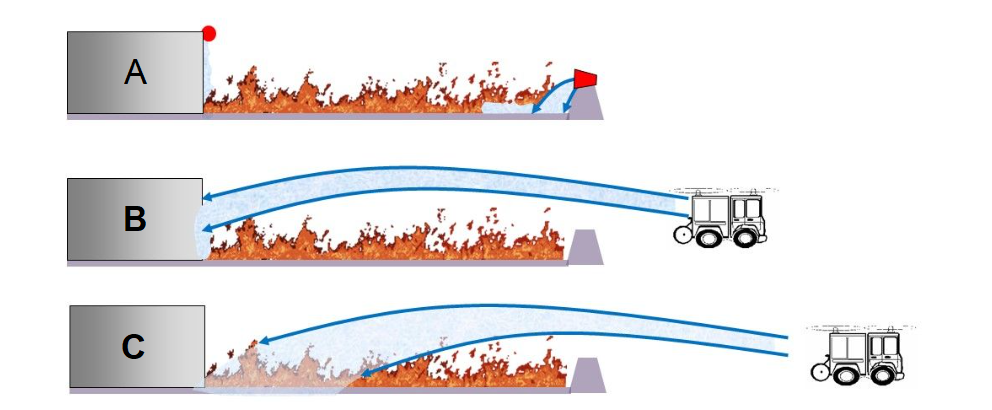
- the method of application (gentle, indirect, or direct)
- les recommandations du fabricant pour le taux expérimental
- specific conditions at the time the fire was reported: weather, accessibility, response time, etc.
See also:Training on industrial chemical hazards
What is the application rate used for?
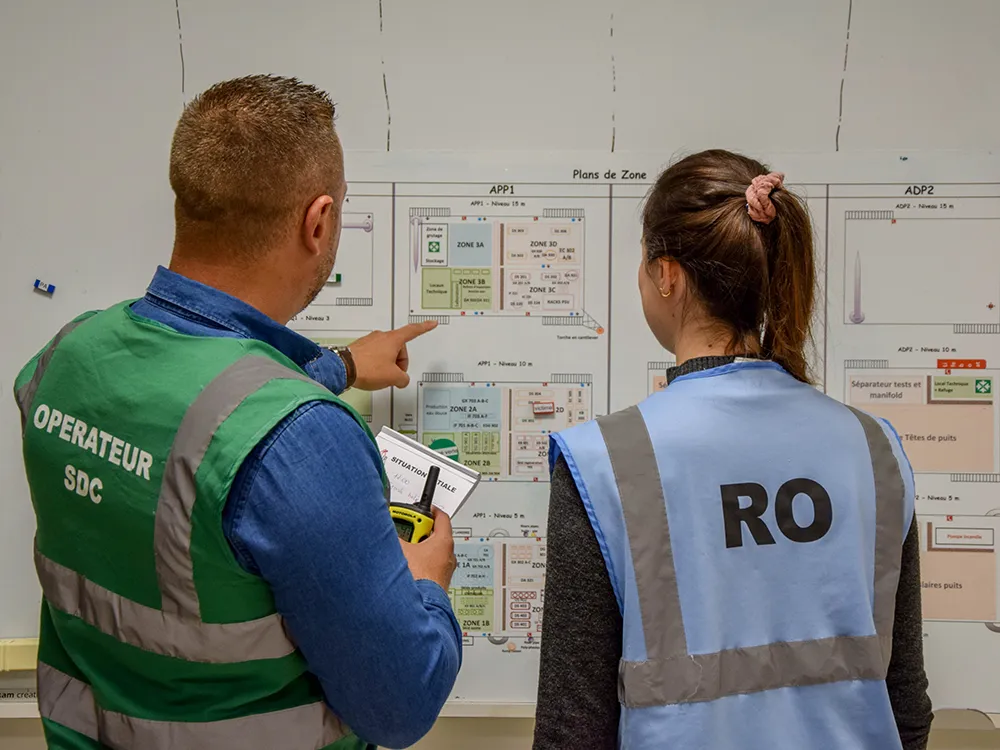
The applicable rate for a given scenario is systematically recorded in the Internal Operations Plan (POI) when one exists. It is the key element in fighting flammable liquid fires. In fact, the application rate specified in the POI must be the one used as the extinguishing rate, as it enables the fire to be extinguished, and for one additional key reason: the calculation of the necessary reserve of water and foam solution.
Finally, this extinguishing rate makes it possible to determine appropriate water and foam concentrate reserve capacities to ensure sufficient stock for the production of foam solution. In conjunction with the various flammable liquid fire scenarios outlined in its hazard study, the application rate specified for each scenario in the POI must ensure that any flammable liquid fire breaking out on the site can be effectively contained.
See also:How can you practice implementing the POI?
Gesip, foam stabilizers, and application rates
With a long history of experience in industrial risk prevention, Gesip—founded in 1953—has developed recognized expertise in fire management. This expertise is recognized not only by the partners who turn to Gesip for fire safety training directly on-site in Roussillon or Vernon.
In fact, Gesip is recognized by the government as the only French organization capable of classify foam concentrates as “high-performance.” Gesip goes even further by making its know-how, expertise, and the technical facilities at its centers available to test new innovative equipment or to participate in the development of technical specifications as part of a request for proposals.
See also:Industrial Fire Safety Training