
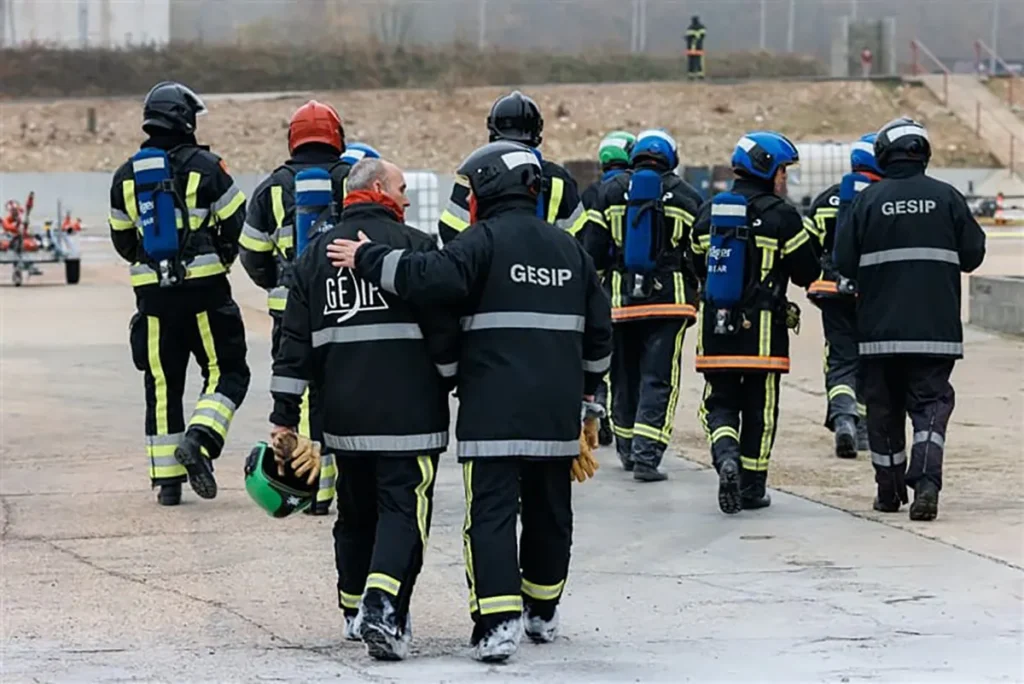
Les industriels se doivent aujourd’hui de respecter la réglementation en prévention des risques. Pour ce faire, ils sont tenus de mettre en place une organisation capable de garantir la sécurité de leurs infrastructures. Cette organisation doit permettre la protection du personnel, hommes et femmes, en cas de risques majeurs, notamment, les incendies.
It is therefore essential to establish an organizational structure at each site in the event of an industrial crisis. To this end, training on industrial risks and command posts . Their purpose is to teach responders how to manage the crisis and allocate resources according to the specific activities involved.
The Role of the Command Center in Industrial Crisis Management
The command post plays a critical role in a crisis situation. Its responsibilities in such situations are as follows:
- Conduct an initial assessment of the incident based on its type and severity (chemical fire, nuclear fire, etc.);
- Determine whether public emergency services are needed;
- Oversee all internal operations;
- Implement the defined strategies;
- Propose intervention strategies;
- Manage the organization and the internal and external communication and information channels.
Establishing Leadership in Emergency Response Operations
One of the key tasks is to optimize the effectiveness of the measures put in place. During an emergency response, the response team leader’s responsibilities are as follows:
- Ensure personal protection and collective safetythrough the use of PPE (personal protective equipment);
- Analyze a work area and the associated risks;
Assign tasks to staff;
- Provide updates on the crisis.
Gesip Training Program for the Command Post (PCA)
Gesip offers a varied and comprehensive training program for command positions. Here are two examples:
Training in the Management of an Forward Command Post (GPCA)
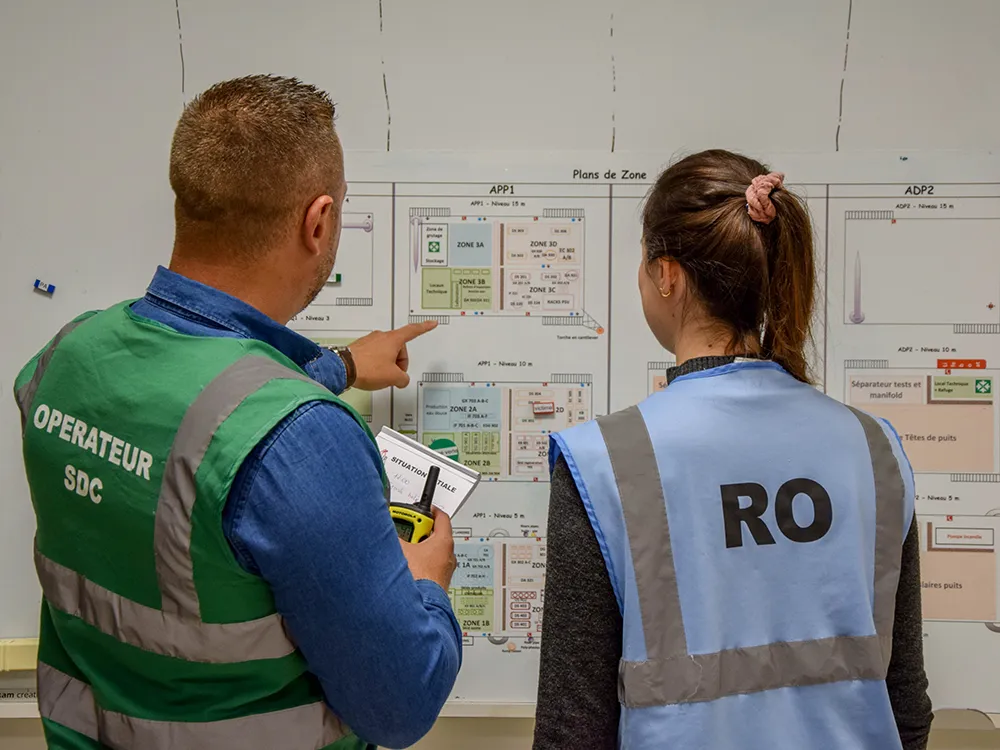
This training is designed for incident commanders and operations team leaders. The curriculum is intended to equip participants to manage fire situations at both the national and local levels. This must be done in coordination with firefighters and emergency and protective services. The training details the operation of the forward command post (FCP) :
- The secure positioning of the forward command post;
- The tools needed for it to function properly;
- The interface with the operations command post.
The training focuses on site security organization and the role of the Emergency Response Coordinator within the POI organization. It takes the form of a real-life scenario exercise. The key principles of emergency response and the tools available to the Emergency Response Coordinator are covered.
Training on the Operational Command Post (OCP)
This training is intended for all staff members of a crisis management unit and public sector emergency response teams (SDIS). It is also intended for anyone responsible fororganizing a command post . By the end of the training, participants will have learned the following:
- He will know where to set up his operations command post;
- He will be familiar with his duties and responsibilities, as well as how to use crisis management tools.
Explore our full range of training programs on the chain of command and emergency management:
- CHAIN OF COMMAND
- Security Officer (AG SUR)
- On-site training for the crisis management team on flammable liquids and pollution control (APCEX LIF ANTI-POL)
- Train the crisis management team at the chemical plant (APCEX CHIMIE)
- Initial Chemical Emergency Response (PAU CHIMIE)
- Initial Emergency Response (IER)
- Train the site crisis management team (APCEX)
- Activating Your Emergency Plan (APOI)
- Test Your Overall Organization (EGA)
- Initial Emergency Gas Response (PAU GAZ)
- Train the on-site gas crisis management team (APCEX GAZ)
- On-Call Duty and Emergency Rooms (PAU ICPE)
- Aviation Emergency Response Team (PAU Aviation)
- EMERGENCY MANAGEMENT
- Calculating Water and Foam Concentrate Consumption – E-learning
- Power-Weight Curve: Theory and Exercises (PWC) – E-learning
- The PCEx Room (Operations Command Post) – e-learning
- Internal Operations Plan Tools: Theory and Exercises (POI) – E-learning
- Application Rates – E-learning
- Managing a team of Emergency Response Coordinators (EURC)
- Management of a Forward Command Post (FCP)
- Using the Tools of the Internal Operations Plan (POI 2) – Level 1 Curriculum
- Ability to integrate into an on-site crisis management team that calls on public emergency services (POI 3) – Level 2 Curriculum
- How to Integrate into an Autonomous On-Site Crisis Management Team in the Petrochemical Industry (GS) – Level 2 Course
- Knowing how to integrate into a crisis management team at an LPG site (GS GAZ)
- Knowing how to integrate into a crisis management team at a chemical plant (GS CHIMIE)
- Be able to integrate into a crisis management team at a transportation company or pipeline operator (GS CANA)
- Major Emergency Management (GUM INTER)
- On-Site Management of Major Emergencies (SMME)
- Moderate- or High-Intensity Exercise (MHI-E)